
If things weren't so crazy I'd come up.Headed to Vegas to a Red Rock Canyon NCA M-Th for a rock climbing trip with Miriam.

You are using an out of date browser. It may not display this or other websites correctly.
You should upgrade or use an alternative browser.
You should upgrade or use an alternative browser.
How'd it go today?
- Thread starter MasterBlaster
- Start date
- Replies 90K
- Views 7M
More options
Who Replied?
Dave Shepard
Square peg, round world.
The mills and tree cos are the only log trucks. No independent trucks any more.I'm surprised given the woodsy country you're in

Burnham
Woods walker
That's a pretty spot, @SeanKroll. M and I camped there for several days a few years ago, enjoyed some very nice hikes.

OK, here's some pics to start with. Plenty still to organize yet.
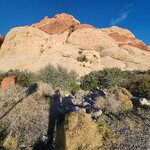
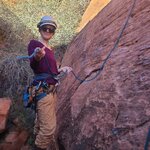
These are at Red Rock Canyon, a BLM site a little west of Las Vegas. Apparently it's one of the top five rock climbing areas in the US. Over 2000 identified routes. We camped here for just shy of a week, had some very nice hikes, slick rock wanderings, and canyon scrambles.
These are at Red Rock Canyon, a BLM site a little west of Las Vegas. Apparently it's one of the top five rock climbing areas in the US. Over 2000 identified routes. We camped here for just shy of a week, had some very nice hikes, slick rock wanderings, and canyon scrambles.
Last edited:




flushcut
TreeHouser
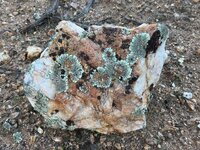
Any gold in the quartz?
I was wondering about it. Most quartz is smashed to bits. I wonder if naturally or from prospectors.Any gold in the quartz?
flushcut
TreeHouser
Looks a little big to have been mined, but I’m no miner.

Kaveman
Treehouser
As a general rule, if the quartz shows signs of oxidation, which that specimen does, it contains gold. As for how much? You'd have to crush it and process it to find out. Probably significantly less than a gram from that hunk of rock. A dump truck full of that stuff is probably worth the time and effort, but not by much.
flushcut
TreeHouser
And just how do you know it’s not the mother load? Lol
Dave Shepard
Square peg, round world.
The exhaust on my Golf is coming apart. It sounds like I'm in a fog horn when it upshifts.
Kaveman
Treehouser
Science! Quartz, and all the other minerals it may contain are deposited in a liquid state, thus, there can only be a certain percentage of other minerals in suspension within the liquid column. As they settle, they self segregate according to the strongest law on earth, gravity. Over time, more unstable elements oxidize. The deeper into the rock strata the host quartz is housed, the less oxidation can occur. The longer a specimen rock is exposed the more oxidation that will occur. The more unstable the minerals present, the more oxidation that can occur, etc.And just how do you know it’s not the mother load? Lol
David's photographed rock shows low to moderate levels of oxidation. In context with several hundred years worth of desert variety lichen growth, the specimen shows low levels of oxidation. When we consider that gold is likely only as high as 0.001% of suspended minerals, and that the specimen discussed exhibits low levels of mineralization overall, it is reasonable to conclude that the quartz is worth more as a specimen stone, than the value of any contained gold. Thus, it is not worth the energy required to refine said stone in search of mineral wealth.
Thank you for attending this short TED talk on geology. Understand that it is a primer and that the only law of geology I have learned is in consideration of land slides. "If it has slid once, it WILL slide again."
Dave Shepard
Square peg, round world.
I've been studying battery systems a little bit. It looks like there might be some simple options to do what I want, and not terrifyingly expensive (thought not exactly cheap). I've got all the batteries in the garage where it's about 40*. Still haven't figured out what I need to charge and evaluate the health of the batteries. The dead of winter in a heated garage is an ideal time of year to do this.
I've been thinking about the long game with this potential system. Initially, I was thinking of charging off the grid, then having an inverter hooked to the generator side of my transfer switch. Then someone suggested running off of the batteries all the time, and having the batteries charged off the grid. That way an outage would not require having to switch to batteries because I would already be on batteties. Plan C is to charge from a propane generator (which I have, not hooked up). I could run this system staying on the generator side of the transfer switch, with grid backup, I'd, at some point, eliminating the grid. My National Grid (that's pronounced "National Greed") bill is ridiculous, and I can buy a lot of propane, especially considering how little energy I use.
The batteries were a windfall, and would cost about $12k to replace, but after seeing the prices of LiFePo4 batteries, it would only be about $2k to replace the lead acid. In 8-9 years, I'm expecting the cost per kwh to be even cheaper, and the chemistry to be even better than what we have now. Sodium-ion looks very promising, and is here already.
So far, I'm $75 into this project (1 pair of Carhartt double-knees with acid holes, and $25 in diesel for my friend's little International to haul then home), so I think I'm off to a good start. If the batteries last 8 years, I'll save about $13k, without adjusting for rate hikes. Minus hardware and propane, of course. Theoretically, I can leave the grid hooked up on the other side of the transfer switch, as backup to my backup, but the trick they are using is to make their money off of delivery fees and other sneakery, so that might make it not worth having as backup.
I'm keeping battery upgrades, and solar panels in mind when choosing hardware options. I know where there are a couple pallets of panels that are outdated that the commercial solar company left behind at a friend's house... Just dumping the cash into a complete off-grid system isn't necessarily cost effective, I don't think, but scrounging, and having a hatred of The Greed, I think I can make it work.
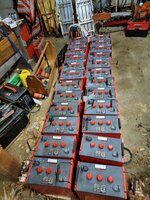
Many pounds of batteries moved into the garage (my shoulders might be usable again soon):
I've been thinking about the long game with this potential system. Initially, I was thinking of charging off the grid, then having an inverter hooked to the generator side of my transfer switch. Then someone suggested running off of the batteries all the time, and having the batteries charged off the grid. That way an outage would not require having to switch to batteries because I would already be on batteties. Plan C is to charge from a propane generator (which I have, not hooked up). I could run this system staying on the generator side of the transfer switch, with grid backup, I'd, at some point, eliminating the grid. My National Grid (that's pronounced "National Greed") bill is ridiculous, and I can buy a lot of propane, especially considering how little energy I use.
The batteries were a windfall, and would cost about $12k to replace, but after seeing the prices of LiFePo4 batteries, it would only be about $2k to replace the lead acid. In 8-9 years, I'm expecting the cost per kwh to be even cheaper, and the chemistry to be even better than what we have now. Sodium-ion looks very promising, and is here already.
So far, I'm $75 into this project (1 pair of Carhartt double-knees with acid holes, and $25 in diesel for my friend's little International to haul then home), so I think I'm off to a good start. If the batteries last 8 years, I'll save about $13k, without adjusting for rate hikes. Minus hardware and propane, of course. Theoretically, I can leave the grid hooked up on the other side of the transfer switch, as backup to my backup, but the trick they are using is to make their money off of delivery fees and other sneakery, so that might make it not worth having as backup.
I'm keeping battery upgrades, and solar panels in mind when choosing hardware options. I know where there are a couple pallets of panels that are outdated that the commercial solar company left behind at a friend's house... Just dumping the cash into a complete off-grid system isn't necessarily cost effective, I don't think, but scrounging, and having a hatred of The Greed, I think I can make it work.
Many pounds of batteries moved into the garage (my shoulders might be usable again soon):

SeanKroll
Treehouser
Red Rock Canyon National Conservation Area



this week has been crappy and slow
pulled something in my shoulder starting the 881 last week, severe pain when laying down so I have barely slept all week
Fiancé passed out in the kitchen on the 4th and hit her head on the tile floor, got a concussion which caused a seizure on the way to the ER, spent 5 days in the ER, she got out a few days ago and is doing alright, headache and 7 stitches plus a broken phone and a burnt countertop/microwave, oh well, phone and kitchen stuff can be replaced
took my neighbor a load of firewood, their driveway is horrible to back a trailer down but I made it finally, leg hurts from the clutch in my truck which is making me really want a 13 speed but I probably won't keep the truck long enough to make it worthwhile, got the truck stuck on my own driveway and had to pull it out, thankfully the loader was able to get it (and drag it with the parking brake on!)
broken finger is healing up decent, not the same shape as it used to be but alright for dropping 85 pounds of steel on it
New Holland isn't giving me a trade in value on my machine so it'll be for sale soon, sale price way too high but I need to pay it off, I think like $57,000, yikes!
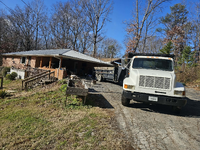
truck sounded real nice this morning!
View attachment f98d707f-e037-45a3-95ea-9fcdd466217a.mp4
pulled something in my shoulder starting the 881 last week, severe pain when laying down so I have barely slept all week
Fiancé passed out in the kitchen on the 4th and hit her head on the tile floor, got a concussion which caused a seizure on the way to the ER, spent 5 days in the ER, she got out a few days ago and is doing alright, headache and 7 stitches plus a broken phone and a burnt countertop/microwave, oh well, phone and kitchen stuff can be replaced
took my neighbor a load of firewood, their driveway is horrible to back a trailer down but I made it finally, leg hurts from the clutch in my truck which is making me really want a 13 speed but I probably won't keep the truck long enough to make it worthwhile, got the truck stuck on my own driveway and had to pull it out, thankfully the loader was able to get it (and drag it with the parking brake on!)
broken finger is healing up decent, not the same shape as it used to be but alright for dropping 85 pounds of steel on it
New Holland isn't giving me a trade in value on my machine so it'll be for sale soon, sale price way too high but I need to pay it off, I think like $57,000, yikes!
truck sounded real nice this morning!
View attachment f98d707f-e037-45a3-95ea-9fcdd466217a.mp4

yeah thats pretty much the only way to describe my last 18 months, worst year and a half I've ever had, learning a lot about the affects of extreme stress, cannot wait to get out of tree work and shut my phone off for a week so I can chill and try to make myself feel human again, Depersonalization-Derealization Disorder isn't fun
on a good note I have big things coming soon, won't be tree related so I don't know that I will post much unless you guys want to see me do household projects on me and my Fiancé's house once I finally move to NC, gotta replace counters, water heater, some plumbing, window frames, ETC, kinda basic stuff to make this singlewide nice for 5-10 years while we save up enough to build a dream home!
also she came with 2 tiny humans, closest I've ever had to kids is my niece's and nephew's so I am way out of my normal realm, google says I gotta feed them and apparently I'm supposed to hold them, any way to attach a saw lanyard to them? I barely trust myself to hold a cup of coffee 😆
joking aside, my entire life has gone upside down and right side up so many times at this point that it almost feels normal, not sure what to think of that, oh well, onto greener pastures!
on a good note I have big things coming soon, won't be tree related so I don't know that I will post much unless you guys want to see me do household projects on me and my Fiancé's house once I finally move to NC, gotta replace counters, water heater, some plumbing, window frames, ETC, kinda basic stuff to make this singlewide nice for 5-10 years while we save up enough to build a dream home!
also she came with 2 tiny humans, closest I've ever had to kids is my niece's and nephew's so I am way out of my normal realm, google says I gotta feed them and apparently I'm supposed to hold them, any way to attach a saw lanyard to them? I barely trust myself to hold a cup of coffee 😆
joking aside, my entire life has gone upside down and right side up so many times at this point that it almost feels normal, not sure what to think of that, oh well, onto greener pastures!

Burnham
Woods walker
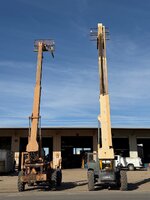
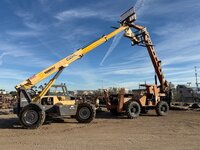
Those telles are kissin' cousins.
The younger one is safety for the older while changing a hoseThose telles are kissin' cousins.
Tele jousting?
Telehuggies?

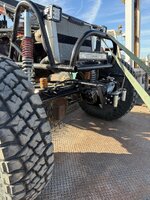
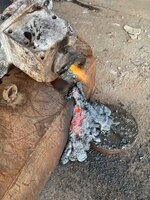
The 6” shaft would not come out of the block. We heated it with rosebud torches and then melted it out with an oxygen lance.what are you doing with the torch? are the two last pictures the same thing from different angles?
Older vid of process on larger job
Kaveman
Treehouser
Heavy Metal Wizardry!
Dodge is sold!
chipper has had zero bites, not sure what to do about that, tried treetrader and they want money upfront regardless of if it sells, local auction yard won't do a reserve and the one an hour away won't have me my money for a minimum of 30 days, I think the price is more than fair for what it is but it very well may just get parted out, real shame considering I've dumped thousands into it to make it operate like a brand new machine and its listed for cheap all things considered
NH still hasn't given me a trade in value on my loader, and I already know listing it won't go well at the price I need to pay it off, nobody around here wants to hire anyone with a machine, they would rather rent a bobcat and destroy yards over paying me even $300 a day so I'm letting them do their thing
ah the joy of trying to get out of business
chipper has had zero bites, not sure what to do about that, tried treetrader and they want money upfront regardless of if it sells, local auction yard won't do a reserve and the one an hour away won't have me my money for a minimum of 30 days, I think the price is more than fair for what it is but it very well may just get parted out, real shame considering I've dumped thousands into it to make it operate like a brand new machine and its listed for cheap all things considered
NH still hasn't given me a trade in value on my loader, and I already know listing it won't go well at the price I need to pay it off, nobody around here wants to hire anyone with a machine, they would rather rent a bobcat and destroy yards over paying me even $300 a day so I'm letting them do their thing
ah the joy of trying to get out of business
Burnham
Woods walker
A thing I have learned over my many years is that what used things are worth often has barely a passing acquaintance with what people will actually pay for them.
You may just have to downgrade your expectations on the chipper. It may be the finest operating machine of its type around, but it looks like it's been rode hard and put up wet. Maybe some sanding, paint, and new decals would be worth your time and $$?
You may just have to downgrade your expectations on the chipper. It may be the finest operating machine of its type around, but it looks like it's been rode hard and put up wet. Maybe some sanding, paint, and new decals would be worth your time and $$?
Last edited:
Similar threads


Users who are viewing this thread
Total: 32 (members: 0, guests: 32)